


A fashion brand’s manufacturing partner ends up shaping almost everything downstream — fit, fabric quality, turnaround time, and ultimately how a customer feels the moment they hold the finished product. It’s a decision that carries nearly as much weight as the product design itself.
This guide walks through what a Custom Clothing Manufacturer in Bangladesh actually does, the benefits of going this route over off-the-shelf sourcing, how the production process typically unfolds, and why Bangladesh has become such a significant hub for brands looking to manufacture apparel at scale.
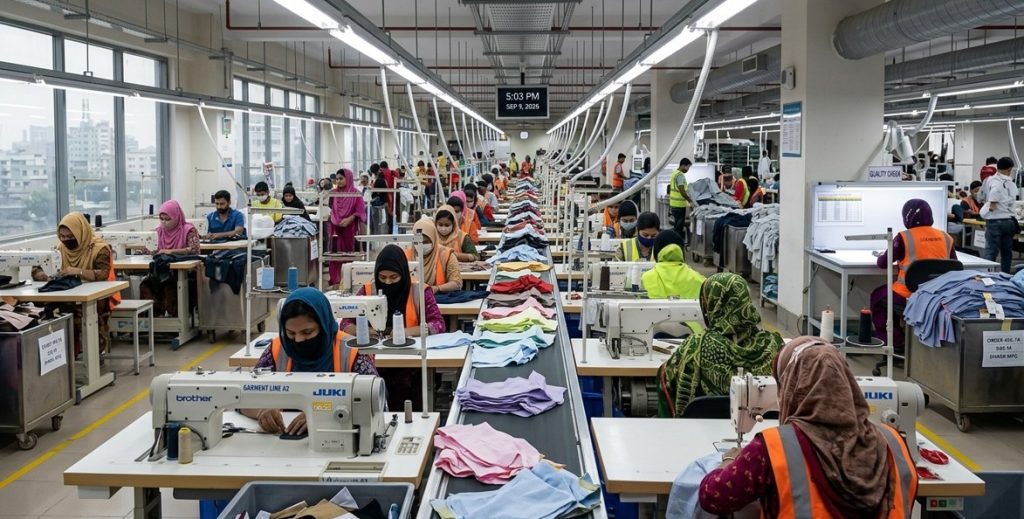
What Is a Custom Clothing Manufacturer in Bangladesh?
A custom clothing manufacturer produces apparel built around a brand’s own specifications rather than selling pre-made, generic stock. That means working from a brand’s designs, chosen fabrics, sizing requirements, and branding elements — labels, packaging, trims — to produce a finished garment that’s genuinely private label rather than a rebadged catalog item.
This differs from buying wholesale off a manufacturer’s existing line. With custom garment manufacturing, the brand controls the design from the first sketch through to bulk production, which matters enormously for companies trying to build a distinct identity in a crowded apparel market.
Most manufacturers in this space work across a range of production types: cut-and-sew garments, knitwear, activewear, denim, and private-label collections for both established brands and newer companies entering the market for the first time.
Benefits of Working With a Custom Clothing Manufacturer in Bangladesh
Generic sourcing works fine for some brands, but plenty choose custom manufacturing instead, and it’s usually for practical reasons rather than just looks.
- Custom designs — the brand keeps full say over silhouette, cut, and every detail, instead of picking from whatever a manufacturer already has on the shelf
- Brand identity — labels, hangtags, and packaging all get built around the brand itself, so recognition carries through at every point a customer touches the product
- Fabric and material selection — fiber content, weight, and finish get chosen deliberately, not settled for based on what a stock supplier happens to have lying around
- Flexible production — order sizes can start small for testing and scale up as demand grows, without being locked into one fixed volume
- Quality control — garments get inspected during production, not after they’ve already shipped and a defect turns into a return
- Cost efficiency — once orders move to bulk, per-unit costs usually drop well below what small-batch domestic manufacturing would run
Finding a Custom Clothing Manufacturer in Bangladesh that covers all of this under one roof means a brand isn’t stuck juggling a fabric mill, a separate cut-and-sew shop, and yet another packaging vendor. That kind of split coordination is usually exactly where delays and miscommunication start creeping in.
Our Custom Apparel Manufacturing Process
No two orders look exactly alike, but they all pass through the same core stages — what changes is how long each one takes, depending on the design’s complexity and the size of the run.
|
Step |
What Happens |
|
Design consultation |
This is where it all starts — the brand brings sketches, mood boards, sometimes just a garment they like and want us to riff on, and we talk through what they’re actually trying to build |
|
Fabric selection |
Not just picking a fabric off a shelf. Weight, fiber content, finish — all of it gets decided based on how the garment will be worn and what it needs to cost |
|
Sampling |
Before anything goes to bulk, we build one first. Fit, feel, construction — everything gets checked here while mistakes are still cheap to fix |
|
Pattern development |
Sample’s approved? Now the patterns get refined and graded out so every size in the range fits the way it should |
|
Production |
This is where the factory floor comes alive — cutting and sewing at full scale, now that there’s sign-off on the sample |
|
Quality control |
Nothing skips this step. Every finished garment gets checked against the specs and tolerances that were agreed on from day one |
|
Packaging and shipment |
Last stop: folding, tagging, packing — getting everything ready to go out the door, whether that’s export or local delivery |
Skipping the sampling stage is one of the more common mistakes brands make when working with a new manufacturer, since it’s far cheaper to catch a fit issue on one sample than on a thousand finished units.
Custom Garment Manufacturing in Bangladesh
Bangladesh has grown into one of the world’s most significant destinations for custom garment manufacturing, and that position didn’t happen by accident. The country is currently the world’s second-largest garment exporter, shipping ready-made clothing to more than 150 countries.
Several factors explain why so many brands choose a Custom Clothing Manufacturer in Bangladesh specifically:
- A deeply experienced workforce with decades of hands-on garment production knowledge
- Competitive production costs relative to comparable manufacturing regions
- Established export infrastructure built specifically around the RMG (ready-made garment) sector
- Manufacturing capabilities spanning knitwear, wovens, denim, and technical fabrics
A Custom Clothing Manufacturer in Bangladesh typically has direct experience meeting the compliance and quality expectations of large international retailers, since much of the country’s production capacity has been built serving exactly that market for years.
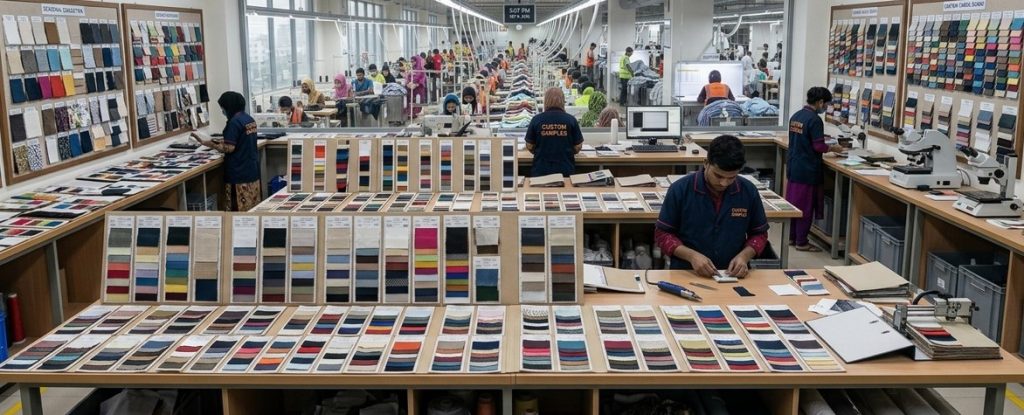
Custom Clothing Manufacturer in Bangladesh for International Brands
Most international brands that end up working with a Custom Clothing Manufacturer in Bangladesh come from one of a few places:
- Emerging labels putting together their first private-label collection
- Established retailers trying to diversify away from a single sourcing region
- Wholesalers looking to build out a private-label line of their own
What draws international buyers in is usually some mix of three things:
- Enough production capacity to actually fulfill the order
- Pricing that holds up competitively
- A manufacturer who can handle everything from fabric sourcing to final export logistics without the brand having to coordinate five different vendors
A manufacturer with real export experience already knows the documentation, shipping timelines, and compliance requirements international buyers expect, which cuts out a lot of the friction that comes with working with someone exporting for the first time.
These relationships also tend to build on their own over time. With each repeat order, both sides get a little better at dialing in fit, sourcing the right fabric, and hitting lead times — so the process gets smoother with every cycle instead of starting over from scratch each time.
Wholesale Clothing Supplier Bangladesh
Not every buyer actually needs a fully custom garment. That’s where a wholesale clothing supplier steps in, working off designs that already exist instead of building something from scratch. It tends to suit:
- Retailers who want variety on their shelves without committing to a full custom design process
- Distributors who need established styles turned around quickly
- Brands chasing speed, without repeating the entire concept-to-sample cycle every single time
Since these garments run against patterns that are already finalized, a wholesale supplier can usually offer a wider catalog and quicker lead times than custom manufacturing allows. Pricing tends to hold steadier too, mainly because the manufacturer skips the development cost that comes with creating a brand-new style.
Some buyers want both worlds — a handful of custom pieces alongside faster wholesale restocks. Plenty of manufacturers running a Custom Clothing Manufacturer in Bangladesh setup are built to handle exactly that, running both models side by side instead of forcing a brand to pick just one.
How to Choose the Right Custom Clothing Manufacturer in Bangladesh
Not every manufacturer fits every brand’s needs, and a mismatch here tends to cause problems that surface much later in the relationship.
- Manufacturing experience — specifically in the product category being ordered, not just general apparel experience
- Minimum order quantity (MOQ) — confirm it matches the brand’s actual order volume and growth stage
- Fabric options — availability of the specific fiber content and finish the design requires
- Production capacity and lead times — whether the factory can realistically hit the brand’s launch or restock schedule
- Certifications and compliance — relevant industry certifications that matter for the target retail market
- Communication and export capabilities — responsiveness during sampling, and experience shipping to the buyer’s destination market
A manufacturer that’s transparent about MOQ, lead times, and pricing structure from the first conversation is generally a stronger long-term partner than one that keeps these details vague until a deposit is on the table.
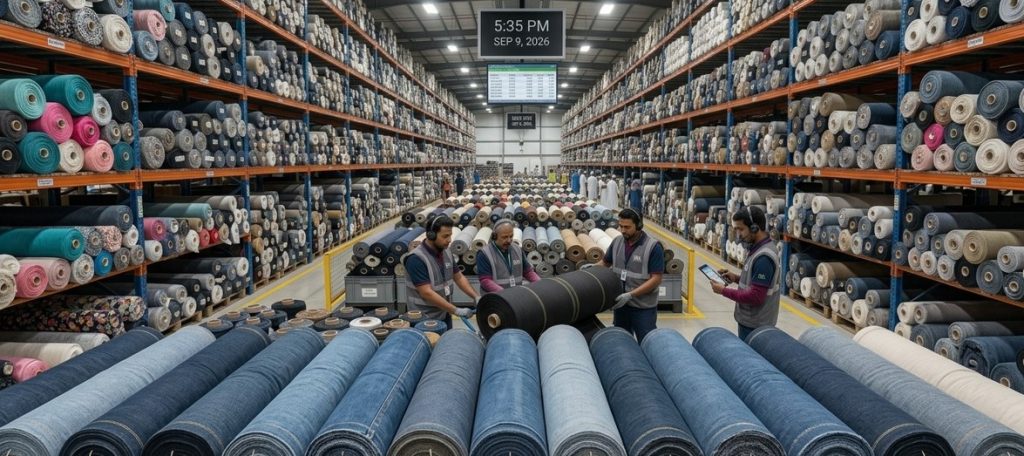
Why Choose a Bangladesh-Based Clothing Manufacturer?
Bangladesh’s place in the global apparel supply chain didn’t happen overnight — it’s the result of decades spent building scale, skill, and infrastructure around one specific goal: export-ready production.
|
Factor |
What It Offers |
|
Workforce experience |
Workers here have grown up around garment production — the kind of knit, woven, and denim expertise that only comes from doing it for decades, not months |
|
Export infrastructure |
Shipping documentation, freight coordination, customs processes — all of it already exists and runs smoothly, built specifically for international orders |
|
Production capacity |
Factories here don’t have to choose between small custom batches and massive bulk runs — many are set up to handle both without missing a beat |
|
Cost structure |
Per-unit costs stay competitive even when compared against most other major sourcing regions in the world |
For brands weighing where to manufacture, this combination is why Bangladesh continues to attract both first-time private-label brands and established retailers expanding their sourcing base.
Frequently Asked Questions
What is the typical MOQ for a Custom Clothing Manufacturer in Bangladesh?
MOQs vary significantly by manufacturer and product type, ranging from a few hundred units for smaller factories to several thousand for large-scale production. It’s worth confirming this early, since it directly affects whether a manufacturer suits a smaller brand or an established retailer.
How long does custom apparel production usually take?
It really depends on how complex the order is and how much you’re producing, but as a general rule: sampling usually takes one to three weeks, and bulk production kicks off once that sample gets the green light. From that first consultation all the way to shipment, most orders land somewhere between a few weeks and a couple of months.
Can I get a sample before committing to a bulk order?
Yes. Reputable manufacturers build sampling into the process specifically so brands can review fit, fabric, and finishing before any bulk commitment is made.
What fabrics can a Custom Clothing Manufacturer in Bangladesh typically work with?
It varies by factory, but most manufacturers can work with a solid range — cotton, polyester blends, denim, knits, and technical or performance fabrics. That said, not every factory does everything well, so it’s worth asking what a specific manufacturer specializes in before assuming they can handle your fabric of choice.
Do custom manufacturers handle international shipping?
If a manufacturer has real export experience, yes — they’ll typically take care of documentation, freight coordination, and whatever compliance requirements come with shipping internationally. Still, it’s worth asking upfront which markets they’ve actually shipped to before, since experience with one destination doesn’t always carry over to another.
Is working with a Bangladesh-based manufacturer suitable for smaller brands?
Depends mostly on MOQ. If a factory’s minimum order lines up with what your brand can actually move, then yes, it works fine. Some factories lean toward smaller custom runs and work well with newer labels, others are built for bulk — so it’s worth checking which camp a manufacturer falls into before signing on.
Conclusion
Picking the right Custom Clothing Manufacturer in Bangladesh affects a lot more than one order — quality, timelines, how well your brand can scale later. Category experience, honest MOQ and pricing, realistic lead times, and actual export know-how matter more than who quotes the lowest price. For brands looking at Bangladesh, the manufacturing depth and export setup already in place make it worth a serious look.
Planning a custom collection or private-label line? Reach out and let’s go over fabric, volume, and timeline — the right partner gets you from concept to export-ready product without the guesswork.