

Introduction: What Will You Learn in This Guide?
Blazers represent a clothing item that can blend in with all varieties of occasion wear.
It can fit into business wear, smart-casual wardrobe, uniforms, high fashion, occasion clothing, and modern street fashion.
Nonetheless, an exquisite blazer needs more than basic garment construction.
A blazer requires accurate pattern cutting, proper construction, material choice, interior lining and interlining, ironing, sewing, finishing, sizing, and quality check.
Thus, it is important for apparel brands, retailers, importers, and private label companies to know what particular Blazer Manufacturer for Europe they want to work with.
Bangladesh established one of the largest apparel manufacturing ecosystems in the world. According to the Bangladesh Garment Manufacturers and Exporters Association (BGMEA), Bangladesh’s RMG export amounted to nearly US$38.70 billion for FY2025–26. Woven apparel made up about US$18.08 billion from that amount.
In this article, you will learn:
- Why Bangladesh is an important country for Blazer Manufacturer for Europe
- How blazers are produced
- Which materials are used in blazer construction
- Why the way blazers are made and fitted is important
- How quality control is organized in blazer production
- What sustainable solutions exist
- What a manufacturer should guarantee when signing a deal
- How Vero Style assists fashion brands
Why Is Bangladesh an Important Destination for Blazer Manufacturing?
Internationally, Bangladesh stands out for its capacity in mass apparel manufacturing and exporting. As BGMEA states, the country generated around US$18.08 billion in exports of woven apparel for FY2025–26. Woven apparel is a term comprising various types of structured outfits and falls under the realm of formal and fashion apparel.
The extensive Blazer Manufacturer for Europe industry enables international buyers to take advantage of the following:
- Established garment producers
- Fabric supply chains
- Product development expertise
- Trained garment professionals
- Quality assurance systems
- International export capabilities
- Sustainable production options
- Large-scale production capacity
Thus, for businesses creating blazers together with pants, shirts, coats, dresses, and various pieces of woven apparel, Bangladesh serves as a substantial resource of a well-developed Blazer Manufacturer for Europe supply chain.
Bangladesh Apparel Manufacturing by the Numbers
The country’s apparel sector provides useful context for international fashion buyers.
| Industry Indicator | FY2025–26 |
| Total RMG exports | US$38.70 billion |
| Knitwear exports | US$20.62 billion |
| Woven apparel exports | US$18.08 billion |
| Trousers | US$12.83 billion |
| T-shirts & knitted shirts | US$8.14 billion |
| Sweaters | US$5.16 billion |
| RMG share of Bangladesh’s total exports | 80.62% |
These figures demonstrate the scale of Bangladesh’s export-oriented apparel industry.
For a brand sourcing structured garments such as Blazer Manufacturer for Europe, the country’s established woven-garment ecosystem can be an important consideration.
What Makes a Good Blazer Manufacturer for Europe?
Blazers necessitate considerable expertise in garment creation. Unlike simple T-shirts, blazers are made up of countless parts that must be well-coordinated. A factory applying for the job must possess knowledge of the following manufacturing processes:
- The creation of patterns.
- Choosing fabrics.
- Working with lining materials.
- Making the lining.
- Creating shoulders.
- Making sleeves.
- Making collars and lapels.
- Making pockets.
- Placing buttons.
- Pressing.
- Finishing.
- Inspecting quality.
Small mistakes may lead to drastic changes in the appearance of the Blazer Manufacturer for Europe.
How Are Blazer Manufacturer for Europe?
A common process of making blazers consists of several steps.
Those are as follows:
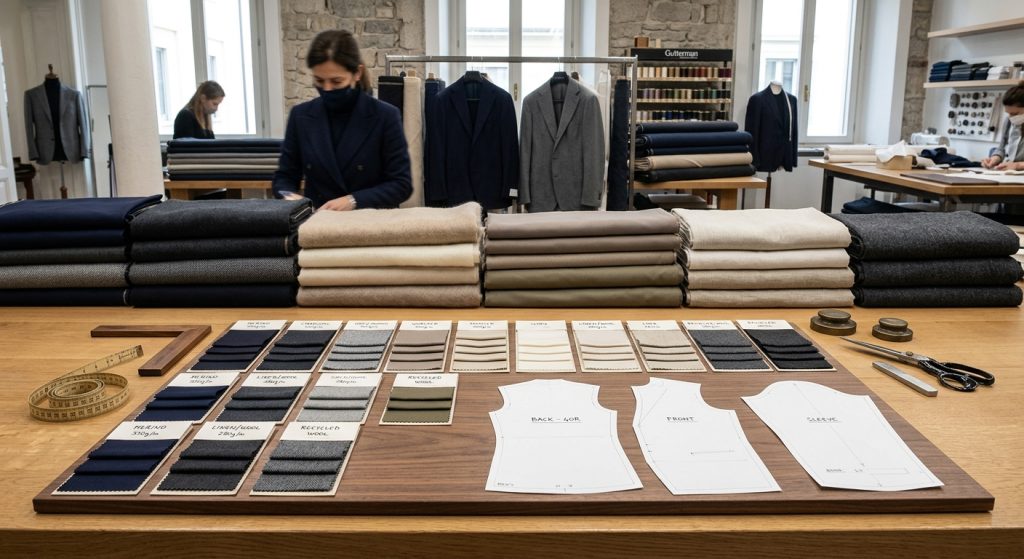
Design → Choosing the fabric → Making a pattern → Making samples → Cutting the fabric → Fusing → Sewing the blazer → Pressing the finished product → Making finishing touches → Quality checking → Packing the blazer → Shipping.
Each of the stages must be done with great responsibility.
Let’s analyze the process in detail.
Stage 1: Design stage
First of all, a design idea must be developed.
A fashion brand might provide:
- Sketches
- Technical packs
- Reference samples
- Measurement tables
- Fabric descriptions
- Color patterns
- Lining characteristics
- Button description
- Requirements for brand promotion.
An experienced Blazer Manufacturer for Europe development team has to supply clients with all the necessary specifications at this stage.
This stage is very important for the blazer making process as there are certain changes in the construction that can affect the fitting.
Stage 2: Choosing the most suitable fabric for the blazer
Choosing a fabric is very important because fabrics need to have different characteristics depending on the season.
Common Blazer Fabrics
| Fabric | Characteristics | Typical Applications |
| Wool | Warm, durable and structured | Premium formalwear |
| Wool Blend | Combines properties of different fibres | Business and fashion blazers |
| Cotton | Breathable and versatile | Casual blazers |
| Linen | Lightweight and breathable | Summer collections |
| Polyester | Durable and cost-effective | Commercial formalwear |
| Viscose Blend | Soft drape and comfort | Fashion garments |
| Recycled Polyester | Recycled synthetic fibre option | Sustainable collections |
| Wool-Recycled Blends | Combines wool with recycled fibres | Responsible fashion |
The correct choice depends on:
- Season
- Target market
- Price point
- Desired drape
- Garment structure
- Comfort requirements
- Sustainability objectives
Step 3: Pattern Development
The process of pattern creation significantly contributes to the final fit of the blazer.
Key measurements can include:
- Chest
- Waist
- Shoulder
- Length of the back
- Designed sleeve
- Shoulder to shoulder measure
- Lapel
- Length of the front
- Width of the hem
- The pattern does determine the design of the blazer.
- For instance, a company can choose from:
- Slim fit
- Regular fit
- Relaxed fit
- Oversized fit
- Tailored fit
Hence, the importance of pattern development before mass production is key in case of Blazer Manufacturer for Europe.
Step 4: Sample making
Typically before common production the producers create samples.
The sampling allows the buyer to check:
- Fit
- Fabric
- Colour
- Construction
- Lining
- The shape of the lapel
- The position of the pockets
- The length of the sleeve
- The place of the buttons
- General look
For more complicated designs several sampling cycles may be needed.
The sample should be approved before starting mass production in case of Blazer Manufacturer for Europe.
Phase 5: Fabric Cutting
Once the fabric and sample is approved, it is time to cut the fabric in accordance with the production patterns.
Cutting precision is vital as even slight variations may lead to differences in garments produced.
For patterned or textured fabrics, the manufacturer must also pay attention to:
- Pattern matching
- Grain direction
- Fabric direction
- Nap
- Colour variation
- Proper cutting may decrease fabric waste.
Phase 6: Interlining and Fusing
Interlining may provide additional structure and rigidity for parts of the blazer.
It may be used around:
- Front panels
- Collar
- Lapels
- Cuffs
- Waist areas
Interlining that needs to be used will depend on the expected structure of the fabric and its properties.
Fusing should be strictly controlled because too much heat or incorrect application will damage the fabric or make it worse in case of Blazer Manufacturer for Europe.
Phase 7: Sewing and Construction
After the preparation stage has been completed, elements start getting assembled.
This can include:
- Front panels
- Back panels
- Sleeves
- Collar
- Lapels
- Pockets
- Lining
- Buttons
- Labels
Quality of construction is a crucial factor for success in structured garments since visible defects will have an immediate effect on the final appearance.
Understanding Blazer Lapels
The lapel serves as a crucial element of jackets.
Some well-known varieties are:
Notch Lapel
It is one of the frequently used lapel types in formal ones as well as in casual Blazer Manufacturer for Europe.
Peak Lapel
Adds a sophisticated and unique touch to the presentation of jackets.
Shawl Lapel
A rounded type of lapel usually connected to formal and evening dresses.
Your choice depends on where you want to position your product.
Step 8: Sleeve and Shoulder Assembly
The shoulders of a blazer have an important impact on its shape.
In terms of construction, a blazer can feature:
- Structured shoulders
- Soft shoulders
- Shoulder padding
- Light shoulder padding
Casual construction As far as sleeves are concerned, they should be constructed precisely and finished neatly.
An improper construction may lead to:
- Torsion
- Creasing
- Unequal armholes
- Restricted mobility
- Poor fit
Step 9: Final Pressing
Pressing is a vital stage in the process of Blazer Manufacturer for Europe.
This is where the final shape of the garment is obtained.
Finishing means pressing the following parts of the blazer:
- Lapels
- Front
- Sleeves
- Shoulders
- Collar
- Hems
The aim here is to make sure the blazer looks neat but not burn the material.
Step 10: Quality Control
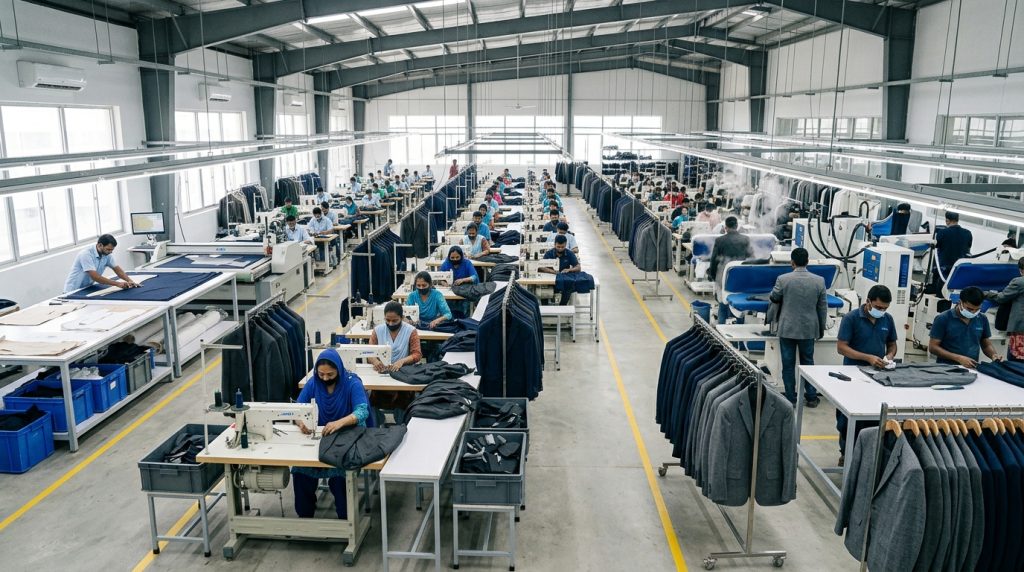
Quality control should be an integral part of the process.
Quality control allows conducting a check-up on:
- Fabric defects
- Measurements
- Seaming
- Seam construction
- Symmetry of the lapels
- Shoulder assembly
- Sleeve size
- Pocket positioning
- Buttons
- Lining
- Pressing
- Logos
- Packaging
Quality consistency is most important for international brands.
Common Blazer Manufacturer for Europe Defects
Blazer Manufacturer for Europe should watch out for the following issues:
- Lapels with irregularities
- Measurements that are not accurate
- Sleeves that are twisted
- Shape of the shoulder that is not appropriate
- Threads that are too loose
- Stitches that are uneven
- Pockets that are wrongly placed
- Problems with lining
- Buttons that are out of place
- Damage to fabric
- Improper pressing
- Colors that do not match
These defects can be avoided if proper inspections are conducted at the manufacturing stage by testing samples of the garments.
Why Sampling Is Critical for Blazers
When it comes to structured clothing, sampling becomes crucial. Sampling helps the brand assess the overall garment prior to mass production.
The key checks for sampling include:
Fit: How well does the blazer fit on the body?
Shoulders: Are the shoulders well-shaped?
Lapel: Is the size and design correct?
Sleeves: Is the length and size correct?
Lining: Is the lining fitting correctly inside the main body?
Pocket: Is the pocket in location as specified?
Buttons: Is the button placement and settings correct?
Pressing: Does the garment retain the proper shape?
Mass production must wait till verification and validation of all above aspects.
Sustainable Blazer Manufacturer for Europe
Sustainability in fashion is gaining more and more attention globally. The sustainability level of various brands is evaluated on the bases of:
- Fiber sourcing
- Usage of recycled materials
- Energy consumption
- Water consumption
- Chemical management
- Waste reduction
- Ethically produced goods
- Transparency in supply chain
According to Vero Style, sustainability accompanied by ethical production is a principle of the company’s sourcing and production process which includes responsible sourcing, eco-friendly innovations, usage of organic materials, usage of the recycled materials, and low-impact dye production.
In the case of the development of a sustainable Blazer Manufacturer for Europe, the issue of material selection should be addressed at the very beginning of the development process.
Sustainable Materials for Blazers
Depending on the desired design and performance, brands can consider:
| Material | Potential Application |
| Organic Cotton | Casual and lightweight blazers |
| Recycled Polyester | Commercial and fashion collections |
| Recycled Wool | Premium responsible tailoring |
| Wool Blends | Formal and businesswear |
| Tencel/Lyocell Blends | Lightweight fashion garments |
| Linen | Summer and resort blazers |
| Hemp Blends | Sustainability-focused collections |
The actual suitability of each material depends on the design, construction, market and technical specifications.
What Should You Look for in a Blazer Manufacturer for Europe?
Making an appropriate supplier selection means completing extensive evaluation.
1. Experience with Tailored Items
Find out whether the manufacturer has the experience working with tailored garments.
2. Product Development
The manufacturer should be capable of:
- Making technical packs
- Taking measurements
- Making patterns
- Collecting reference samples
- Determining construction requirements
3. Fabric Sourcing
Check whether the supplier can source the fabrics based on:
- Fibre composition
- Weight
- Color
- Texture
- Performance
- Sustainability criteria
4. Ability to Sample
The manufacturer must ensure the proper production of samples before the bulk manufacturing process.
5. Quality Assurance
Make sure to find out how does the manufacturer ensure:
- Fit
- Construction
- Measurements
- Fabric components
- Finishing touches
6. Capacity to Produce
The supplier must possess enough capacity to fulfill your orders in time.
7. Experience in International Trade
For international companies the knowledge of international buyers would facilitate the process of sourcing and exporting.
Questions to Ask Before Choosing a Blazer Manufacturer for Europe
Before making a purchase, you should ask these questions.
Questions about products
- Which different kinds of blazers do you make?
- Do you produce blazers for both genders?
- Can you create blazers based on models?
- Are you capable of creating prototypes?
Questions about fabrics
- What are your sources of fabric?
- Can you provide eco-friendly materials?
- What kind of fabric weight do you offer?
- Can you source custom colors?
- Questions about quality
- How do you inspect fabric?
- How do you control the fit of blazers?
- How do you check lapels?
- How do you control pressing?
Questions about production
- What is the minimum order quantity?
- How long does it take to produce samples?
- What lead time do you follow for production?
- What capacity do you have?
- Can you scale production?
- Questions about sustainability
- Can you source organic textiles?
- Can you source recycled raw materials?
- What environmentally-friendly options do you provide?
- How do you control waste in production?
Vero Style: Apparel Sourcing and Manufacturing for Global Brands
Established in Bangladesh, Vero Style Ltd. is both a buying house and apparel sourcing partner for global fashion brands. Furthermore, the company’s mission is to offer solutions for the global fashion industry by offering services from product development, fabric sourcing, production oversight and quality assurance. The company has a wide portfolio which includes formalwear, outerwear, activewear, casualwear, homewear and children wear.
In addition, the nature of the production cycle involves several phases, including product design and sampling, fabric sourcing, and shipping of products. For those fashion brands who are looking for a manufacturing partner for their blazers, Vero Style has the right integrated approach to provide all manufacturing services by using its supply network.
Vero Style’s International and European Market Focus
Vero Style’s office is situated in Dhaka and one is also located in Rome in Italy.
The objective of the Italian branch is to make the company’s work with European brands more effective and to support its international activities.
As reported by the company, its team leaves no stone unturned in terms of quality, requirements and standards.
This international orientation of the company is beneficial for the fashion brands as they need effective communication in terms of specifications and quality and respect to delivery.
Vero Style’s Quality and Industry Credentials
On its website, Vero Style talks about its business and industry credentials, such as:
- Certificate of Incorporation
- Trade License
- Department of Textiles certification
- Membership in Bangladesh Garment Buying House Association
- Export Registration Certificate
The firm claims to be committed to quality, ethical-production, and sustainability in its sourcing and production.
For international buyers, reviewing a vendor’s documentation and authenticity of the certifications should be part of the vendor selection process.
What Influences Blazer Manufacturing Costs?
There is no universal manufacturing price for a Blazer Manufacturer for Europe.
Several factors influence the final cost.
| Cost Factor | Effect on Cost |
| Fabric | Premium wool and specialized fabrics can increase cost |
| Lining | Premium lining materials affect cost |
| Construction | Structured garments require more production work |
| Interlining | Additional structural components increase material and labour requirements |
| Pockets | Complex pocket designs add production time |
| Buttons | Premium or custom hardware affects cost |
| Embroidery | Additional decoration increases production time |
| Quantity | Larger production runs may improve unit economics |
| Finishing | Specialized pressing and finishing add production requirements |
| Packaging | Custom packaging increases total cost |
| Sustainability | Certified or specialized materials may carry additional costs |
Brands should therefore compare manufacturers based on total value and reliability, not simply the lowest quoted unit price.
Bangladesh vs. Other Apparel Manufacturing Markets
When comparing manufacturing destinations, brands should consider the complete production ecosystem.
| Factor | What to Evaluate |
| Manufacturing capacity | Can the supplier meet your required volume? |
| Structured garment expertise | Does the supplier understand blazer construction? |
| Fabric sourcing | Can the required fabrics be sourced reliably? |
| Sampling | Can prototypes be developed efficiently? |
| Quality control | What inspection systems are available? |
| Sustainability | Can environmental requirements be met? |
| Cost | Does production meet target costing? |
| Lead time | Can seasonal deadlines be achieved? |
| Export experience | Can international orders be handled efficiently? |
| Communication | Is the supplier responsive and technically capable? |
The best Blazer Manufacturer for Europe is not necessarily the one offering the lowest price.
The better partner is the one that consistently delivers the required combination of quality, fit, cost, capacity, compliance and delivery.
Frequently Asked Questions About Blazer Manufacturing
What does a blazer producer do?
A blazer producer makes tailored items as per the concept and requirements by the given brand. The services offered depend on the manufacturing model, and the company can serve the purpose of fabric procurement, pattern addressing, sampling, cutting, manufacturing, finalizing, controlling, and packaging.
Is Bangladesh a good destination for blazer production?
Bangladesh can be named one of the significant players in the apparel production and export industry. Its woven garments sector generated USD 18.08 billion in exports in 2025—2026.
Can the producer create custom blazers?
Definitely. The production of custom-made blazers may depend on the requirements of the brand, e.g. fit, fabric type, lapel type, pockets, lining, buttons, colours, or any other branding or design.
Can blazers be produced with the help of sustainable textile and apparel materials?
Definitely. The choice of fabric depends on the specific design, and some brands mix organic cotton, recycled polyester, recycled wool, linen, Tencel, and other materials to ensure environmentally friendly production.
What is the importance of sampling in blazer production?
Sampling is useful for assessing fit, fabric, structure, lapel type, shoulder type, sleeve length, lining, and others before starting mass production.
How to Start Your Blazer Manufacturing Project
Prior to reaching out to a Blazer Manufacturer for Europe, it is important to create a comprehensive product specification document to serve as a basis for the future collaboration. Among the essential components of the specification are:
- Type of blazer
- Men’s or women’s design
- Expected volume
- Cost of production
- Composition of fabrics
- Weight of fabrics
- Colour
- Fit
- Size range
- Measurements
- Type of the lapel
- Design of the pockets
- Lining
- Type of buttons
- Branding specifications
- Packaging
- Sustainability requirements
- Delivery address
The more exhaustive your specification will be, the more chances a manufacturer achieves a correct quote and a sample.
If you don’t have a technical pack yet, the product development department could help you convert your idea into a viable specification.
The Future of Blazer Manufacturing
The worldwide fashion business is trending toward a more sustainable and technologically superior production process.
Fashion labels start concentrating on the following:
- The use of high-quality materials
- Practicality
- Environmentally-friendly textiles
- Production done in an ecologically responsible way
- Transparency of supply chain
- Streamlined production processes
- Longevity of products
Certain characteristics of Bangladesh’s extensive garment industry open up opportunities for foreign companies to tap into already existing manufacturing and procurement systems.
The contribution of Bangladesh’s garment industry to the economy is remarkable, as it generated around US$38.70 billion in exports for the fiscal year 2025-26.
In the case of structured clothing, like jackets, future competitiveness will rely heavily on the ability to merge manufacturing expertise with industry know-how, quality assurance methods, eco-friendliness and reliable international communication.
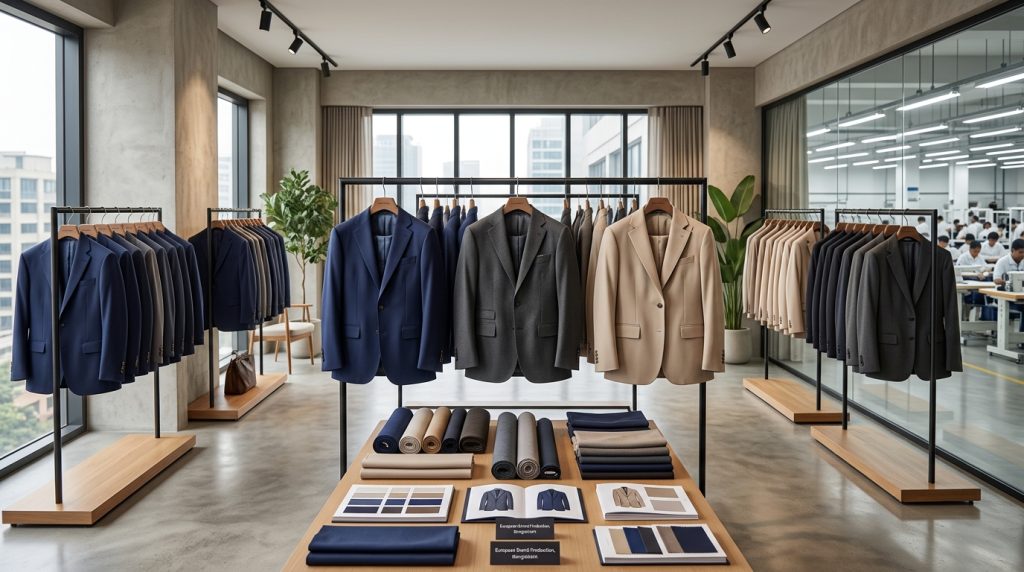
Conclusion: Choosing the Right Blazer Manufacturer for Europe Partner
Selecting the right blazer maker involves more than evaluating production costs. Forming a successful partnership with a blazer maker requires the combination of: the right textile, a proper design, accurate manufacturing, high-quality finishing, effective quality assurance, and on-time shipment. The well-established woven textile and clothing manufacturing base of Bangladesh puts this country on international fashion brands’ radar.
The Vero Style Ltd. company offers the fashion industry a comprehensive range of apparel sourcing services because of quality assurance, fabric sourcing, and assistance in production planning through its manufacturing network. The capabilities of Vero Style Ltd. in creating formalwear lines and its presence in Bangladesh and Europe make it a perfect candidate for companies working on structured apparel lines.