
Introduction: What Will You Learn in This Guide?
Choosing a high-quality sweater manufacturer is one of the most significant decisions for private labels, retailers, fashion brands, and wholesalers.
A sweater is considered much more than just an item of clothing. The quality of a sweater depends on a variety of things, including the yarn used, the knitting technology employed, the gauge used, the manner of production, the size of the item, the finishing process, the quality control, and the production uniformity.
Choosing the right sweater manufacturer partner for global brands may impact the quality of the product, the cost, the delivery time, and customer satisfaction.
Bangladesh has become a leading hub for garment and knitwear manufacturing. Based on data from the Bangladesh Garment Manufacturers and Exporters Association (BGMEA), Bangladesh’s exports of ready-made garments were about US$38.70 billion in FY2025-26, including about US$20.62 billion knitted goods. The total export value of sweaters only reached US$5.16 billion in the same financial year.
In this guide, you will discover:
- Why Bangladesh is important for sweater manufacturer
- How sweaters are manufactured
- Different types of sweaters and knitwear
- How yarn and gauge affect sweater quality
- The importance of sampling and quality control
- Sustainable sweater manufacturer practices
- What to consider when selecting a sweater manufacturer partner
- How Vero Style supports international fashion brands
- Frequently asked questions about sweater manufacturer
Why Is Bangladesh Important for Sweater Manufacturing?
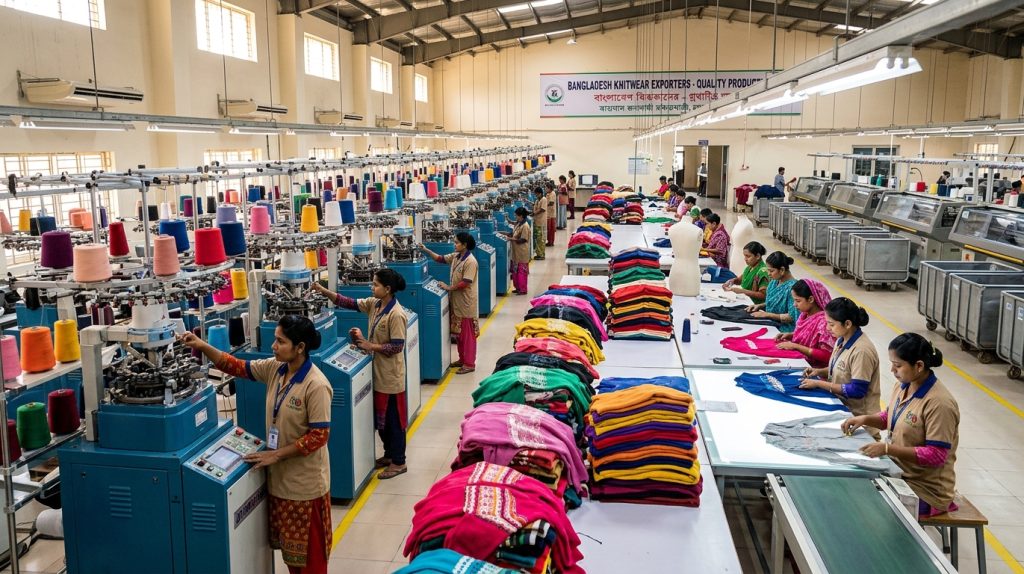
Bangladesh has developed a vast export-driven clothing industry to meet the demands of the global apparel market.
The knitwear sector of Bangladesh plays a vital role. According to the BGMEA, the country exported knitwear worth US$20.62 billion in FY2025-26.
sweater manufacturer are also an important category of clothing exported by Bangladesh.
In FY2025-26, Bangladesh exported sweaters worth US$ 5.16 billion, compared to US$ 5.12 billion in FY2024-25.
These capabilities are advantageous for international buyers:
- Experience in knitwear production
- Wide network of producers
- Highly-skilled workforce
- Access to yarns and fabrics
- Product development capabilities
- Quality control capabilities
- Experience in exporting internationally
- Sustainable materials
- This would help the brands designing seasonal knitwear lines greatly.
Bangladesh Sweater Industry: Key Numbers
The scale of Bangladesh’s apparel sector provides useful context for international buyers.
| Indicator | FY2025–26 |
| Total RMG exports | US$38.70 billion |
| Knitwear exports | US$20.62 billion |
| Woven apparel exports | US$18.08 billion |
| Sweater exports | US$5.16 billion |
| T-shirts & knitted shirts | US$8.14 billion |
| Trousers | US$12.83 billion |
| RMG share of total exports | 80.62% |
These figures are reported by BGMEA based on Bangladesh’s export performance.
The data demonstrates that knitwear is not a small segment of Bangladesh’s garment industry. It represents a major component of the country’s international apparel business.
What Is Involved in Sweater Manufacturing?
The procedure for the production of knitwear sweaters consists of various steps.
Unlike sewn garments, sweaters are mostly characterized by the combination of yarn, knitting structure, gauge, pattern, finishing and garment construction.
The stages that can be identified in the process of knitwear production are the following:
- Designing the product
- Making Yarn selection
- Developing the pattern
- Knitting
- Linking and finishing
- Carrying out the quality control
- Printing labels and packing the garments
- Shipping.
Every step can affect the final quality of the product.
Step 1: Design and Product Development
Every sweater manufacturer creation begins with the concept of the product.
A brand may offer:
- Technical package
- Design drawing
- Prototyping sample
- Measurements
- Color information
- Yarn information
- Pattern information
- Branding details
An experienced production partner should be able to transform that list into a wearable garment ready for production.
During the design process of the creation, feasible technical issues could be clarified before starting bulk production.
Step 2: Choosing the Right Yarn
Yarn is one of the most important components of sweater manufacturing.
Different fibres create different characteristics.
| Yarn/Fibre | Key Characteristics | Common Applications |
| Cotton | Breathable and comfortable | Lightweight sweaters |
| Wool | Warm and insulating | Winter knitwear |
| Merino Wool | Soft, lightweight and temperature-regulating | Premium knitwear |
| Cashmere | Very soft and luxurious | Premium/luxury sweaters |
| Acrylic | Lightweight and cost-effective | Commercial knitwear |
| Wool Blend | Combines properties of different fibres | Fashion sweaters |
| Recycled Polyester | Recycled synthetic fibre | Sustainable knitwear |
| Recycled Cotton | Reuses cotton fibres | Sustainable collections |
| Tencel/Lyocell | Soft and breathable cellulosic fibre | Lightweight apparel |
| Hemp | Natural fibre with sustainability applications | Eco-conscious collections |
Common Sweater Yarn OptionsThe choice should depend on the product’s intended market, price point, performance requirements and sustainability goals.
Step 3: Understanding Knitting Gauge
One of the technical terms buyers should understand is gauge, often written as GG.
Gauge generally refers to the number of needles or knitting density used in a knitted structure.
Different gauges produce different fabric characteristics.
Example:
| Gauge | General Characteristics |
| 3GG–5GG | Chunkier, heavier knit structures |
| 7GG | Medium-weight knitwear |
| 9GG–12GG | Finer and more lightweight structures |
| 14GG+ | Fine-gauge lightweight knitwear |
The appropriate gauge depends on the design.
A chunky winter sweater may require a substantially different knitting structure from a lightweight spring pullover.
Therefore, brands should discuss gauge during product development rather than treating it as a minor technical detail.
Popular Types of Sweaters
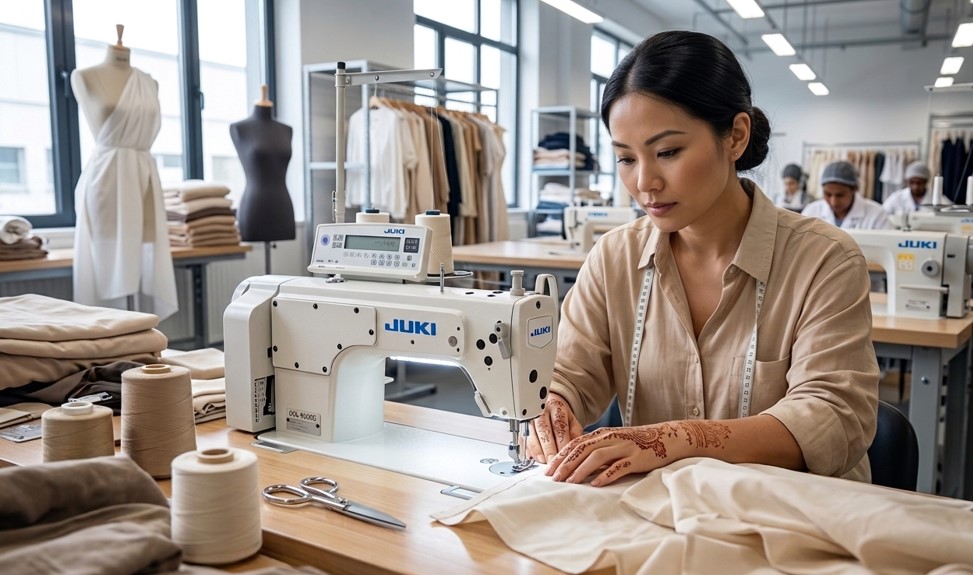
A good partner in the production of sweaters should be able to create many types of styles.
Crew Neck Sweaters
Crew neck sweaters are characterized by the round neckline and represent one of the most flexible styles of knitwear.
They can include:
- Men’s line
- Women’s line
- Children’s line
- Casual wear
- Corporate or casual lines
V-Neck Sweaters
V-neck sweaters ensure a more fitted neckline and can be found in casual or formal collections.
Cardigans
Cardigans are knitted garments that are opened in front and that can contain any of the following:
- Buttons
- Zippers
- Pockets
- Rib
- Decorative knitting
Turtleneck Sweaters
Turtleneck means neck coverage and is a typical feature of cold collection.
Oversized Sweaters
Oversized forms keep being viable styles and need close attention to the following measurements:
- Shoulder
- Body
- Sleeve
- Rib
- Whole drape
Knit Vests
Knit vests can be produced in different sizes and sizes and are usually worn on shirts or T-shirts.
Sweater Manufacturing Process: From Yarn to Finished Product
The sweater manufacturer workflow can be described as follows:
Selecting Yarn → Developing Patterns → Knitting → Linking → Washing → Finishing → Quality Control → Packing → Shipment
Let us now describe the important processes.
Knitting
Yarn is transformed into knitted panels or other knitted items on special knitting machines.
It is crucial to adjust machine settings properly because variations may affect:
- GSM
- Texture
- Dimensions
- Stretch
- Appearance
- Hand feel
Linking and Assembly
After knitting, the elements may be linked or assembled together.
Some important parts include:
- Shoulders
- Sleeves
- Side seams
- Neck
- Cuffs
- Bottom rib
Poor assembly may lead to uncomfortable seams, distortions or low durability.
Washing and Finishing
Through finishing the garment may have:
- Softness
- Shape
- Look
- Hand feel
- Shrinkage
- General appearance
That is why finishing parameters should be approved prior to mass production.
Why Sampling Is Essential Before Bulk Production
Moving straight from the idea stage to mass production without adequate sampling is among the greatest mistakes that a fashion label can make. By using samples, buyers can assess
- Fit
- Measures
- Material
- Gauge
- Color
- Stitching pattern
- Pattern
- Shape
- Finish
- General appearance
Typical development processes may go through:
Design – Prototype – Fit Sample – Amend Sample – Pre-production Sample – Mass Production
The quantity of needed samples depends on product specifications and customer needs.
Quality Control in Sweater Manufacturing
All knitted garments face the possibility of inconsistency in terms of tension, size, color, and construction, making quality control an inevitable and essential part of the process.
The professional quality-control system needs to monitor the garment all throughout production.
Some of the most significant quality control checkpoints include:
- Yarn quality
- Color uniformity
- Knitting defects
- Stitch count
- Measurements
- Shrinkage test
- Seam making
- Loose threads
- Pilling
- Washing quality checks
- Finishing
- Packaging
Quality control can take place at various stages of the production process instead of waiting until the final product is packaged.
Common Sweater Defects Manufacturers Need to Prevent
Common knitting quality problems are:
- Unevenness in knitting
- Needle traces
- Holes
- Thread contamination
- Difference in color
- Mistakes in measurement
- Inconsistent tension
- Oversized yarn
- Seam defects
- Too much pilling
- Shrinkage
- Distortion of shape
Taking preventive measures against these findings requires adherence to technical standards and inspections.
Consistency is especially valued when it comes to international companies that are expected to provide equal standard quality for related product series.
Sustainability in Sweater Manufacturing
Sustainability is an essential point of concern for the international fashion world today.
Fashion brands are considering both the raw materials used in their garments as well as the harms inflicted on the environment at the sweater manufacturer stage.
While producing sweaters sustainably one can use:
- eco-friendly fibers
- recycling yarns
- responsible sourcing methods
- waste reduction
- use of energy-efficient machinery
- low-impact dyes
- responsible chemical management
- enhanced transparency in the supply chain management
As per Vero Style, they prefer using organic materials, recycling processes and low-impact dyes.
Sustainable Materials for Sweater Collections
According to Vero Style’s sustainability information, there are several materials that are useful in responsibly developing clothing.
Those are:
- Organic cotton
- Recycled cotton
- BCI cotton
- Supima cotton
- Tencel/Lyocell
- Hemp
- Recycled polyester
- Bamboo fabric
The company indicates that these materials are part of its wider sustainable sourcing framework.
The choice of materials is critical for brands preparing sustainable knitwear.
What Should You Look for in a Sweater Manufacturer?
Choosing a sweater manufacturer can be more complicated than simply finding the lowest price.
There are some crucial factors to keep in mind.
1. Expertise in Knitwear
Choose a manufacturer that has experience in producing sweaters and knitwear.
2. Product Development
The supplier must possess experience with:
- Technical packs
- Sketches
- Reference samples
- Customized designs
3. Yarn Sourcing
The supplier must have access to yarns that suit your desired:
- Quality
- Price
- Gauge
- Color
- Environmental sustainability
4. Reliability
Ask how quality will be monitored during production.
5. Sampling
Find out if the supplier can create samples before mass production.
6. Sustainability
If your company values sustainability make sure to inquire about:
- Organic fibers
- Recycled yarn
- Certifications
- Waste management
- Chemical management
- Energy efficiency
7. Experience in International Trade
International buyers may find it useful to work with suppliers that are knowledgeable about:
- Export documentation
- Global quality standards
- Compliance requirements of the buyers
- Packaging specifications
- Requirements regarding transport.
Vero Style: Supporting Global Apparel Brands
Vero Style Ltd is a buying house in Bangladesh offering apparel sourcing, product development, manufacturing, quality control, and global export solutions for reputed international fashion brands through reliable factories.
According to the company’s description, the approach comprises of design, sourcing, manufacturing and quality supervision in transforming ideas to finished garments.
The category of products offered includes casual wear, formal wear, home wear, outerwear, active wear, and children wear.
The company carries a rich experience in sourcing and manufacturing quality apparel for the world fashion market as evident from the details of its website.
Brands looking for a manufacturer of sweaters would find a partner in Vero Style for sourcing, developing, and managing products from the factory to the quality assurance stage.
Vero Style’s Focus on Sustainable Apparel
Sustainability is significant to the sourcing and manufacturing processes at Vero Style.
According to the company, it makes use of sustainably sourced materials, such as:
- Organic materials
- Recycled materials
- Environmentally friendly dyes
- Production with the lowest possible energy consumption
- Responsible material sourcing
- Waste reduction
Some of the materials available include organic cotton, recycled cotton, Tencel, hemp, and recycled polyester, as part of its offering of sustainable materials.
For brands working on sweater manufacturer for environmentally friendly customers, discussing these materials at the early stages of product development will enable them to get the specifications right before the sampling phase.
Why Communication Matters in sweater manufacturer
The production of apparel on an international scale involves a number of entities:
Brand → Buying House → Manufacturer → Yarn Supplier → Logistics Provider
Unsuccessful communication may result in:
- Incorrect samples
- Colour errors
- Measurement issues
- Delay in production
- Mistakes in packaging
- Increase in costs
Finding a trustworthy sourcing partner can help meet these requirements.
This means that communication should be counted as part of supplier quality, rather than only as customer service.
sweater manufacturer Cost: What Influences the Price?
There is no universal price for sweater manufacturer.
Several factors influence the final cost.
| Cost Factor | Impact on Manufacturing Cost |
| Yarn type | Wool, cotton, cashmere and blends have different costs |
| Yarn quality | Premium yarn generally increases product cost |
| Gauge | Different gauges require different production settings |
| Design complexity | Intricate patterns require additional production work |
| Garment weight | More material can increase costs |
| Trims | Buttons, labels and zippers add costs |
| Finishing | Special treatments can increase processing costs |
| Order quantity | Larger orders may provide production efficiencies |
| Packaging | Custom packaging affects final pricing |
| Sustainability requirements | Certified or specialized materials may affect cost |
Therefore, brands should compare total value, rather than simply choosing the lowest quotation.
Bangladesh vs. Other sweater manufacturer Destinations
When evaluating sourcing locations, fashion brands should compare several factors.
| Factor | What to Evaluate |
| Manufacturing capacity | Can the supplier handle your volume? |
| Knitwear expertise | Does the partner understand sweater production? |
| Yarn sourcing | Can required yarns be sourced reliably? |
| Product development | Can samples and technical specifications be developed? |
| Quality | What inspection systems are available? |
| Sustainability | Can the supplier meet material and environmental requirements? |
| Cost | Does production meet your target costing? |
| Lead time | Can seasonal deadlines be achieved? |
| Export experience | Can international orders be handled efficiently? |
| Communication | Is the supplier responsive and technically capable? |
The best sweater manufacturer is not necessarily the one with the lowest price.
The right partner is the one that can consistently deliver the required quality, fit, materials, quantity, timing and compliance.
Frequently Asked Questions About sweater manufacturer
What is the role of a sweater producer?
An entity involved in sweater production creates knitwear and provides services including yarn procurement, knitting, garment making, preparation, and quality review as well as packing operations. A sourcing agent can exist to organize such work on behalf of the producer using the services of reliable manufacturing plants.
What types of yarn can be used in sweater making?
Sweaters may be knitted using cotton , wool and other yarn types such as merino wool, cashmere, acrylic, wool blends, and recycled fibers.
What does the term sweater gauge mean?
Gauge defines the density of knitting. It is expressed in GG. Different types of gauge produce different weights and look of the fabric.
Can sweaters be produced from eco-friendly materials?
Yes, possible materials include eco-friendly cotton, recycled cotton, recycled polyester, Tencel, hemp, and other types of fibers.
How significant is sampling?
Sampling plays a crucial role as it helps the brands to determine the fit, measurement, yarn, color, design, gauge and finishing before going for bulk production.
How to Start Your sweater manufacturer Project
If you wish to start the process of producing a new range of sweater manufacturer, you should prepare a product brief beforehand.
The brief should include the following:
- Type of product
- Target audience
- Planned quantity
- Price
- Composition of yarn
- Color of yarn
- Gauge
- Measurements
- Size range
- Knitting pattern
- Brand
- Labels
- Packaging
- Sustainability
- Place of delivery
Providing details helps your partner understand perfectly what you need.
If you have not prepared a technical pack yet, a professional development team will help you create it.
The Future of sweater manufacturer
The fashion sector all over the globe is starting to focus more on:
- Good quality of products
- Eco-friendly materials
- Transparency in supply chains
- Producing in a responsible way
- Manufacturing efficiently
- Innovating in products
- Ability to follow products from their origin to final consumers
The developed knitwear industry enables Bangladesh to benefit from this transformation.
Bangladesh is expected to export sweaters worth more than 5.16 billion US dollars in FY2025-26, which means that sweaters are still among the key products in Bangladesh’s apparel export market.
Brands and manufacturers will increasingly rely on the combination of production capabilities with sustainability, industry knowledge and good service in the future.
Conclusion: Choosing the Right sweater manufacturer Partner
The selection of a sweater manufacturer should be based on more than just a company’s ability to deliver high-quality knitted clothing.
A successful collaboration depends on:
High-quality raw materials + correct machine setting + flawless garment making + effective product sampling + stringent quality control + dependable communication.
The knitwear industry in Bangladesh is rapidly growing, contributing significantly to the global fashion industry. Bangladesh’s knitwear exports amounted to US$20.62 billion in the fiscal year 2025-2026, including US$5.16 billion sweater exports.
Vero Style Ltd. is an apparel source coordinating manufacturing and quality assurance, as well as global export services using trusted factories. The company places high value on sustainable sourcing.
The most suitable partner enables fashion brands to turn a designer’s concept into a profitable product that would meet the expectations of a brand and its customers.