A KnitLab Knitwear Manufacturer in Bangladesh is the factory actually knitting the yarn, linking the panels, and finishing the sweater or knit top before it ships to your warehouse. Most brands only start asking hard questions after a shipment arrives with uneven stitch tension or a gauge that doesn’t match the approved sample.
By then the container’s already paid for, and reordering from scratch costs weeks you didn’t plan for. This guide is about catching those problems before you place the order, not after.
This guide covers what you will learn:
- What a knitwear manufacturer actually does, step by step
- Which knitwear production services you can order
- OEM vs private label for knit garments
- Realistic pricing and minimum order quantities (MOQ)
- A 7-point checklist and red flags to avoid
- How Vero Style’s KnitLab division works with brands
What Does a KnitLab Knitwear Manufacturer in Bangladesh Do?
Cut-and-sew woven garments start with fabric already made. Knitwear starts with loose yarn on a spool, which changes almost everything about how the factory works.
Here’s what actually happens before a sweater reaches your warehouse:
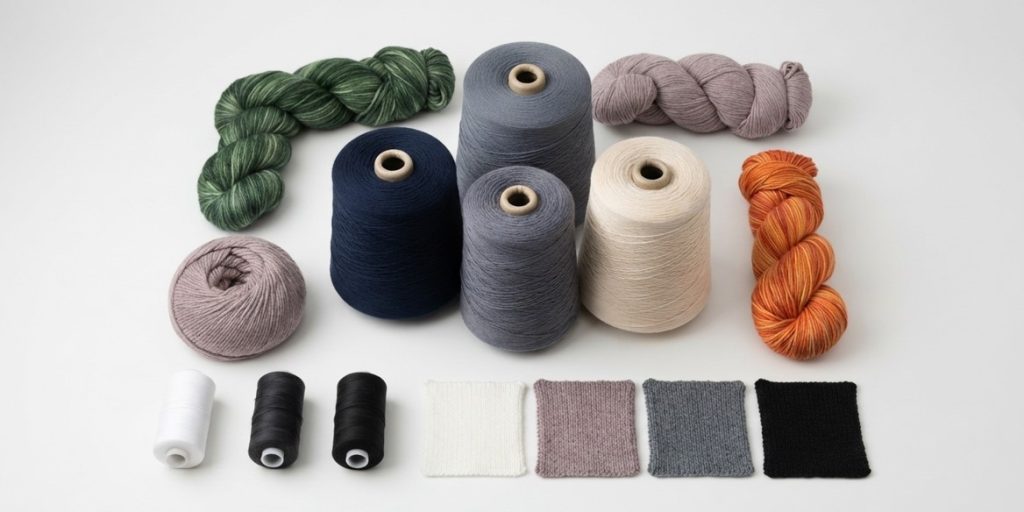
- Yarn gets chosen first, cotton, acrylic, wool blends, or something more specific, depending entirely on what the finished garment needs to feel and wear like.
- The knitting machines, circular or flat depending on the style, turn that yarn into fabric panels, and getting the gauge and stitch density to match the design is where a lot of factories cut corners.
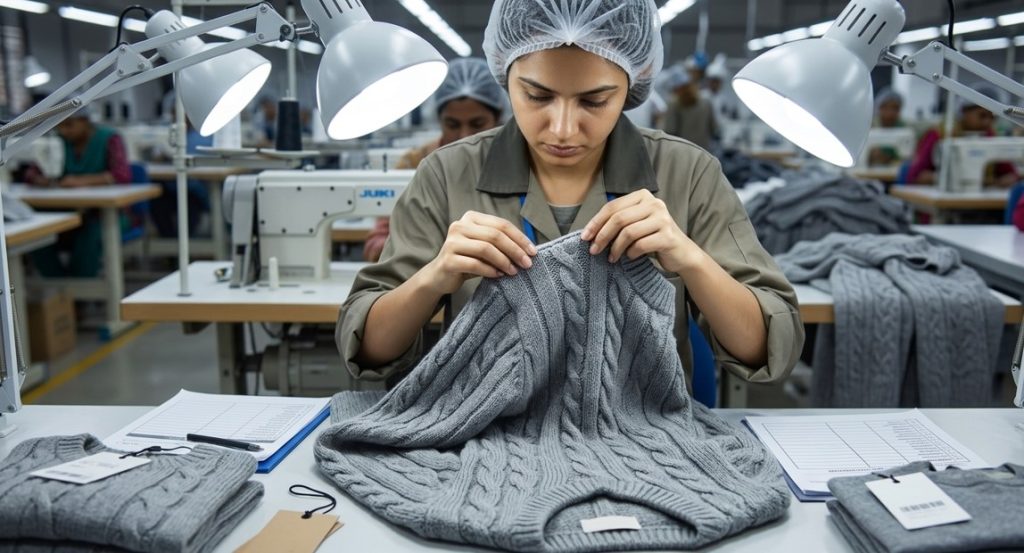
- Those panels then get linked and sewn together at the shoulders, sides, and sleeves, carefully enough that the fabric doesn’t stretch or pucker in the process.
- Steaming, trimming loose threads, and pressing come next, shaping the garment into what it’s actually supposed to look like on a hanger.
- Every piece gets checked for dropped stitches, color consistency, and sizing before it’s cleared for packing.
- Finally, everything gets packed, labeled, and shipped out with the export paperwork handled along the way.
None of this runs on the same machinery as a woven garment factory. That’s the real reason Bangladesh built separate knitwear zones instead of just bolting knitting onto existing woven production lines.
Why Source Knitwear From Bangladesh?
Vietnam comes up first in most sourcing conversations, then China, then Cambodia as the fallback. Bangladesh rarely tops the list by default, but once buyers actually compare the numbers, it usually earns a second look.
| Factor | Why It Matters |
| Lower production cost | Competitive pricing at scale without major quality tradeoffs |
| Specialized knitwear zones | Dedicated facilities with knitting-specific machinery and trained operators |
| Established yarn supply chain | Local access to cotton and blended yarns without long import delays |
| Compliance certifications | Many factories hold BSCI, WRAP, or OEKO-TEX certification |
| Export infrastructure | Decades of experience shipping to US and EU retail buyers |
A general woven garment factory can’t offer knitwear-specific expertise on top of this infrastructure. That combination is exactly what separates a real KnitLab Knitwear Manufacturer in Bangladesh from a factory that just happens to also run a few knitting machines on the side.
Knitwear Production Services You Can Order
A brand with 150 pieces to sell and a retail chain ordering 5,000 units shouldn’t be calling the same production setup. One needs speed to market, the other needs scale.
| Service | Best For | Typical MOQ |
| Private label (stock knit styles) | New brands testing the market | 100–300 pieces |
| OEM (built from your design/tech pack) | Brands with knitwear specs ready | 300–500 pieces |
| Custom jacquard or intarsia knits | Brands wanting unique patterns | 200–400 pieces per style |
| Full package production (yarn to finished garment) | Established brands needing full-service | 500+ pieces |
| Bulk wholesale knitwear | Retail chains and distributors | 1,000+ pieces |
Quick answer: Launching your first knit collection? Private label gets you moving faster. Already have a tech pack ready? OEM keeps the design exactly as you specified it, nothing gets reinterpreted along the way.
OEM vs Private Label for Knitwear
Most first-time buyers don’t realize how much this one decision changes until they’re already mid-production.
- OEM (Original Equipment Manufacturer): your pattern, your gauge, your yarn specs, the factory builds exactly what’s on paper. Works well once you actually have a tech pack ready to hand over.
- Private label: you’re picking from templates the factory already makes, then layering your own branding, labels, and packaging on top. Faster, but less unique.
Ask any KnitLab Knitwear Manufacturer in Bangladesh which model actually fits your timeline before committing to a production run. The wrong choice here costs weeks you won’t get back.
How Much Does Knitwear Manufacturing Cost in Bangladesh?
Pricing depends on yarn type, knit complexity, garment construction, and order volume. The figures below are general estimates; always request a factory quotation based on your tech pack.
| Product Type | Estimated Cost (USD/piece, FOB) | What Affects the Price |
| Basic cotton knit t-shirt | $2.00 – $3.50 | Yarn quality, knit density |
| Knit pullover/sweater | $5.00 – $10.00 | Yarn blend, gauge, construction |
| Jacquard or patterned knitwear | $7.00 – $14.00 | Pattern complexity, number of colors |
| Knit cardigan with buttons/zips | $8.00 – $15.00 | Trims, panel count, finishing |
| Heavy-gauge wool knitwear | $12.00 – $22.00 | Yarn cost, weight, hand-finishing |
Do not compare quotes on price alone. Ask every manufacturer: What gauge and yarn count are included in this price? Is sampling charged separately? What’s the lead time from sample approval to shipment?
How Vero Style’s KnitLab Works With Brands, Step by Step
A clear process protects both sides of a knitwear order. This is how Vero Style’s KnitLab division, a KnitLab Knitwear Manufacturer in Bangladesh, runs a typical project.
Step 1: Consultation. Everything starts with a conversation about your knit style, yarn preference, quantity, and timeline, then we figure out together whether OEM or private label actually fits what you’re building.
Step 2: Knit sampling. Your design or reference turns into a physical knit sample before bulk production ever starts. You check the gauge, the drape, the fit, and either approve it or send it back.
Step 3: Yarn and trim sourcing. Once that sample is approved, yarn, buttons, zippers, and labels all get locked in for the entire run, so nothing shifts midway through.
Step 4: Bulk knitting and sewing. This is where the factory floor takes over, knitting, linking, sewing, and finishing, with quality checks built into each stage rather than saved for the end.
Step 5: QC and shipment. Before anything leaves the building, a final inspection goes through stitch consistency, sizing, and finishing. Then it’s packed and shipped out.
Vero Style runs this same process for a 100-piece private label order and a 5,000-piece wholesale contract alike, the scale changes, the steps don’t.
7 Things to Check Before Hiring a KnitLab Knitwear Manufacturer in Bangladesh
Use this checklist before placing your first order.
- Sample gauge accuracy. Knitwear sizing shifts easily with even small gauge differences, so confirm the sample’s stitch gauge matches your spec exactly before approving anything.
- Yarn sourcing transparency. Ask directly where the yarn comes from, and whether it actually matches the fiber content listed on your tech pack.
- Certifications. If your retail partners need compliance proof, request real BSCI, WRAP, or OEKO-TEX documentation, not just a mention of it.
- MOQ flexibility. Find out whether the minimum applies per style, per color, or across your entire order, the answer changes the quote significantly.
- Lead time clarity. Get the timeline from sample approval to shipment in writing, with some buffer built in for the delays that almost always happen.
- Finishing quality. Loose threads and uneven seams are common knitwear defects, so ask to see finished samples up close before committing to bulk.
- Export documentation support. Confirm they handle commercial invoices, packing lists, and shipping paperwork correctly, so nothing gets stuck at customs.
Why this matters: According to the World Trade Organization, Bangladesh remains among the top apparel exporters globally, meaning buyers have many factories to choose from, so a brand should never settle for the first quote without working through this checklist first.
Red Flags to Avoid
Watch for these warning signs before signing a production agreement.
- No knit sample process, or they push straight to bulk production
- Inconsistent gauge between the sample and bulk delivery
- No written contract covering price, timeline, and quality standards
- Unverifiable certifications, such as a BSCI claim with no certificate number
- Pressure to pay full amount upfront instead of a standard deposit structure
- No post-shipment support if defects are found after delivery
If a KnitLab Knitwear Manufacturer in Bangladesh refuses to provide a pre-shipment inspection report, treat that as a serious warning sign.
Which Yarns Work Best for Knitwear?
Ask a buyer what went wrong with their first knit order, and fabric choice comes up more often than design. The wrong yarn ruins a good pattern faster than anything else.
| Yarn | Best For | Notes |
| 100% cotton | T-shirts, casual knits | Breathable, soft, moderate stretch |
| Cotton-acrylic blend | Sweaters, cardigans | Affordable, holds shape well |
| Merino wool | Premium knitwear | Warm, soft, higher price point |
| Acrylic | Budget knitwear | Low cost, less breathable |
A knowledgeable KnitLab Knitwear Manufacturer in Bangladesh picks yarn based on where the garment will sell and what price point it’s targeting. Whatever happens to be cheapest to source that particular month shouldn’t be the deciding factor.
Why Choose Vero Style’s KnitLab
Vero Style’s KnitLab works as a KnitLab Knitwear Manufacturer in Bangladesh, producing knit tops, sweaters, and casual wear for brands at very different stages, some placing their first order, others scaling into thousands of units.
Here’s what that looks like once you’re actually working with us:
- Nothing moves to bulk production until you’ve approved a physical sample first.
- MOQ structure gets explained upfront, before you’ve committed to anything.
- Yarn gets matched to your garment’s intended market and price point, not picked at random.
- In-house knitting machinery keeps gauge consistent even across large orders.
- Every shipment goes through quality control inspection before it leaves.
- Export documentation gets handled for US, EU, and other international destinations.
Frequently Asked Questions
What is the minimum order quantity for a knitwear manufacturer in Bangladesh?
It depends on the service. Private label usually starts lower, often around 100 pieces, while custom jacquard or full-package production tends to need closer to 500.
How long does knitwear production take?
Sampling takes about 1 to 2 weeks. Once that sample’s approved, bulk production runs another 4 to 8 weeks depending on order size and how complex the design is.
Can a Bangladeshi factory handle custom jacquard knit patterns?
Most established knitwear factories can, jacquard and intarsia knitting are usually done in-house, though complex patterns sometimes push the MOQ a little higher.
Do I need to provide my own yarn?
Not usually. Manufacturers typically source yarn based on whatever specifications you give them, though brands that already work with a yarn supplier sometimes bring their own.
What certifications should I check before ordering?
BSCI and WRAP speak to ethical labor practices, while OEKO-TEX confirms the yarn and fabric are free from harmful substances. Retail partners in the US and EU often ask for one or both.
Is Bangladesh a good choice for small knitwear brands with low MOQs?
For private label, yes, several factories work with smaller quantities. Custom jacquard or full-package production is a different story, and usually needs higher minimums to make financial sense.
Conclusion
The factory you choose doesn’t just affect one order, it shapes your product quality, your delivery timelines, and eventually how customers see your brand. A verified certification and an accurate sample gauge matter more here than a slightly lower quote.
Pull samples from two or three factories before deciding anything. Lay their knit quality and finishing side by side, and don’t place a bulk order until every term is in writing. Contact Vero Style’s KnitLab, an experienced KnitLab Knitwear Manufacturer in Bangladesh, for a free consultation and production quotation.